Etna, Sicily: Europe’s most active volcano
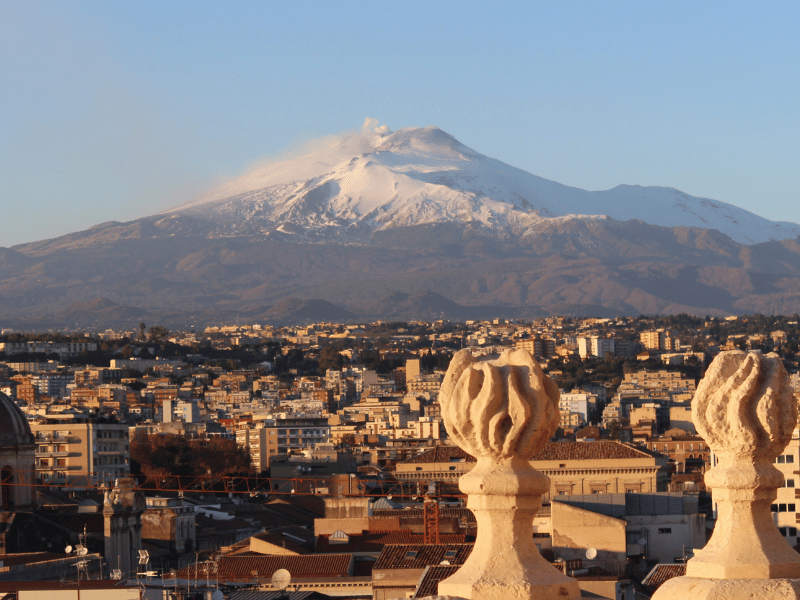
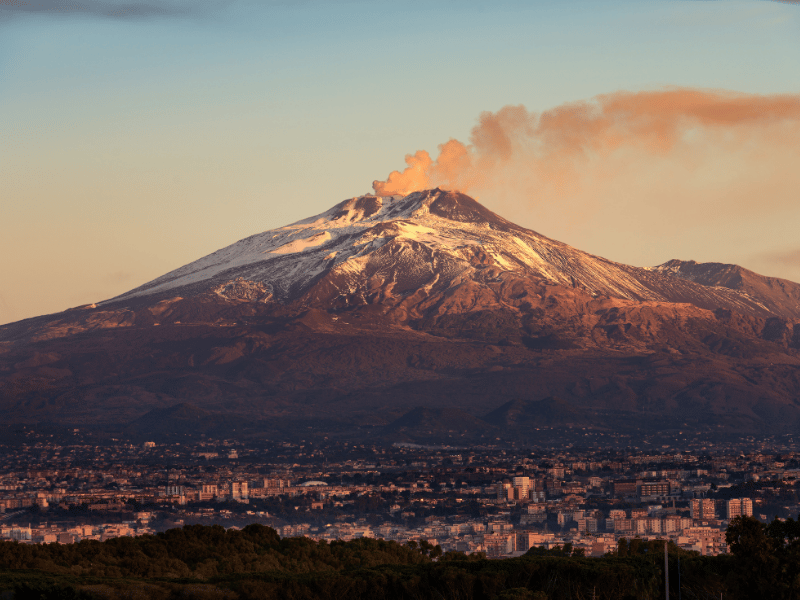
From almost anywhere in eastern Sicily, you can see it: an enormous, often smoking cone towering above the rest of the landscape. Etna isn’t just a mountain with a nice view. It’s a living, constantly changing volcano, and that’s exactly what makes it one of the most fascinating places on the island. Here’s everything you need to know before visiting the volcano yourself.
A volcano that’s never quiet for long
Etna is Europe’s most active volcano, and that’s no exaggeration. Eruptions aren’t rare here, they’re routine: on average, something happens several times a year, ranging from a brief ash cloud to weeks of sustained lava flows. Volcanologists at Italy’s INGV institute monitor the mountain day and night, and it’s that constant surveillance that makes it possible to visit Etna safely for most of the year, even during periods of heightened activity. Lava flows tend to move slowly and predictably, and hazardous zones are redrawn with each new phase.
That does mean access to certain trails, and to the summit itself, can vary from one period to the next. Before you set off, it’s always worth checking the current status.
How tall is Etna, exactly?
A question that’s surprisingly hard to answer: Etna genuinely changes height. The volcano sits somewhere between 3,350 and 3,400 metres, but every major eruption can make the summit a little higher or lower, depending on whether new material builds up or part of the crater rim collapses. That makes Etna not only Europe’s highest active volcano, but also one of the few mountains in the world whose exact height is never quite settled.
Wine grown on volcanic soil
Vineyards ring the base of Etna up to around 1,000 metres, with the Nerello Mascalese grape as the region’s star. The volcanic, mineral-rich soil gives Etna DOC wines a character found nowhere else in Sicily: crisp, spicy, and, according to connoisseurs, surprisingly reminiscent of Burgundian pinot noir. A wine tasting at the foot of a volcano you’ve just watched smoking is one of the most memorable combinations Sicily has to offer.
The cable car and hiking trails
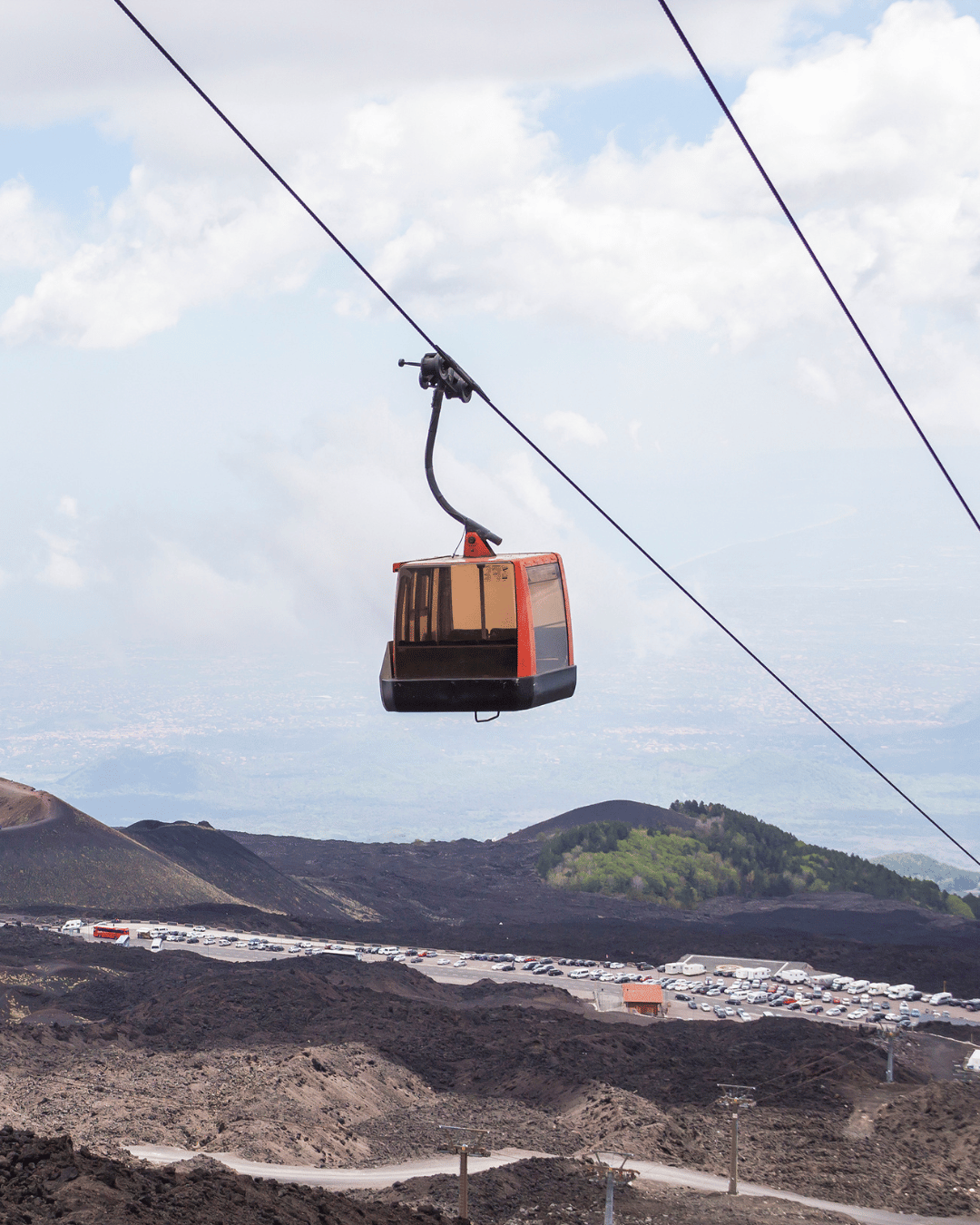
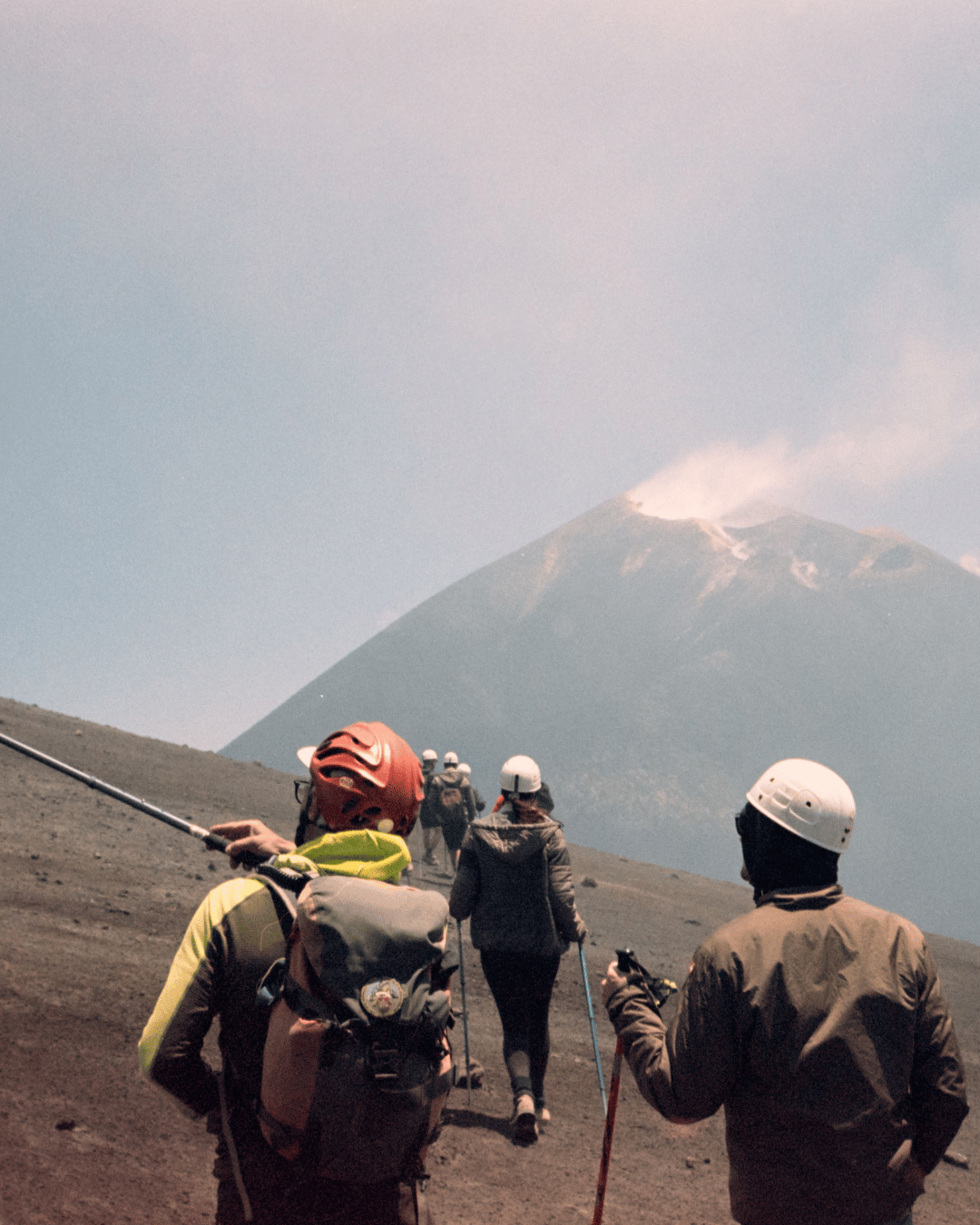
The Funivia dell’Etna, the volcano’s official cable car, takes you from around 1,900 metres up to 2,500 metres. From there, a 4×4 bus, or for the more adventurous, a hike with a certified volcanological guide, carries you on to almost 3,000 metres, with views over the active craters. The final stretch to the very top always requires a guide, simply because the terrain and activity keep changing.
If you want to guarantee a spot, it’s best to book in advance directly through the official Funivia dell’Etna website, rather than through a third-party reseller.
Can you visit Etna right now?
Given how frequently it’s active, Etna’s status is never entirely fixed. Sometimes the cable car runs as normal and you can get almost to the summit; other times, access is temporarily limited to a lower altitude due to increased activity. Both scenarios are worthwhile: a quiet Etna lets you explore the craters and lava fields from past eruptions at leisure, while an active period shows you, from a safe distance, one of Europe’s most awe-inspiring natural phenomena. Before you go, always check the current status and available routes on the official Funivia dell’Etna website, so you know what to expect on the day.
From Palermo to Etna
The Vespa Trip Sicily starts in Trapani, close to Palermo, on the other side of the island, far from Etna’s east coast. Direct flights to Palermo (Falcone-Borsellino) run from several UK airports, including London (Heathrow, Gatwick, Luton and Stansted), Manchester and Birmingham, with British Airways, easyJet and Ryanair all covering the route. From the US, Neos runs a seasonal non-stop service from New York JFK. That means the volcano’s status has no bearing on the start of your trip, or your flights. Fancy experiencing Etna anyway? It works well as a side trip before or after your Vespa trip, while you’re already on the island. Discover The Vespa Trip Sicily and start your Sicilian adventure in Palermo.